The Lower Valley moisture picture
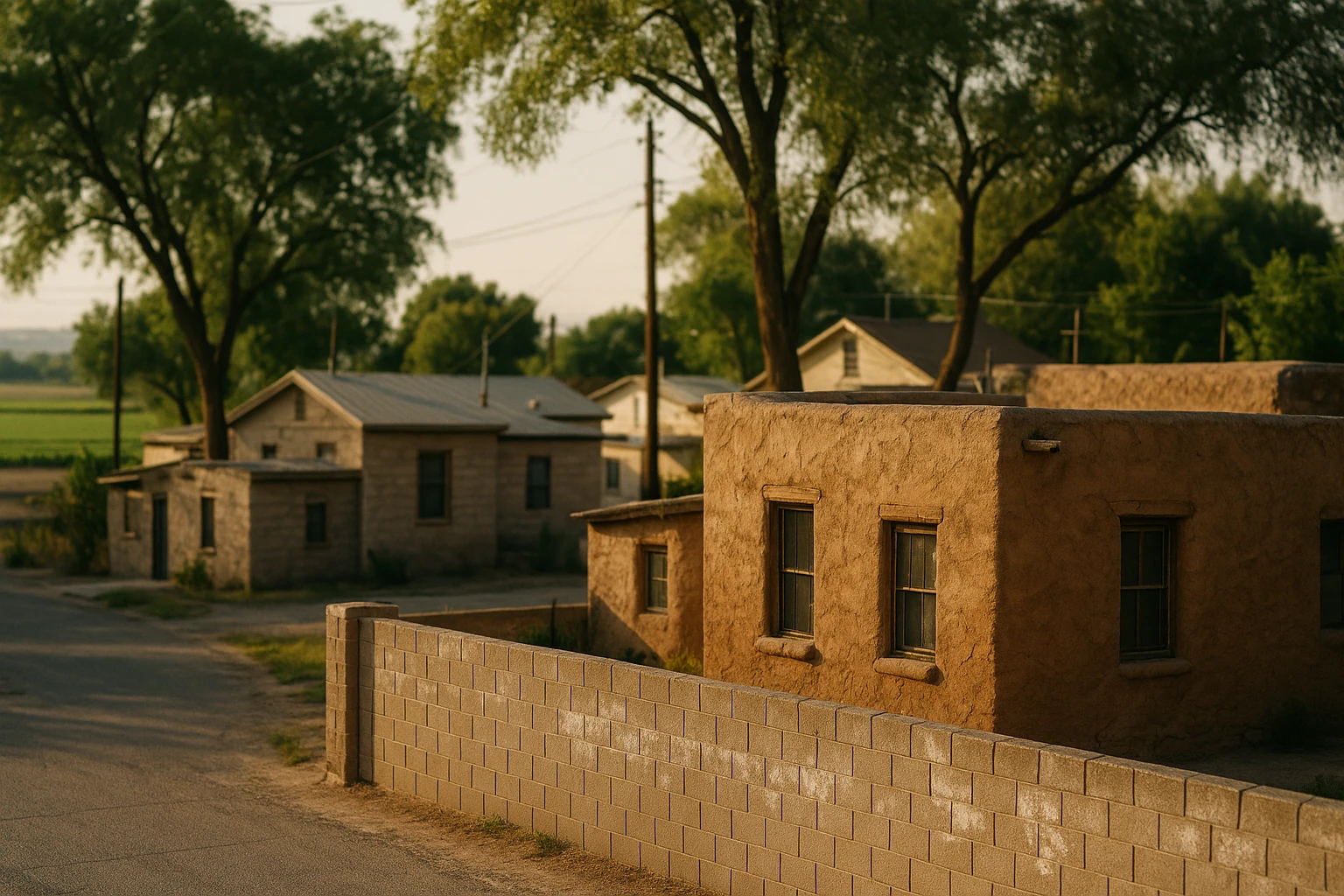
The Lower Valley — Ysleta, the area around the historic mission, and the older neighborhoods south and east toward the river — is some of the most historic ground in El Paso, settled and farmed long before the modern city grew up around it. That history is exactly what shapes its mold problems. The land is old floodplain and irrigated farmland near the Rio Grande, so the water table is naturally high. The homes are older too, many built of adobe, block, or early framing with moisture barriers that were minimal to begin with and have since failed. Where a high water table meets a porous, aging wall, moisture moves upward into the structure — a pattern called rising damp that's far more common here than in the city's newer subdivisions.
Rising damp and old walls
Rising damp is the Lower Valley's signature moisture issue. Groundwater and irrigation moisture migrate up through the base of block and adobe walls, carrying salts that leave a white, crumbly bloom (efflorescence) on the surface and keeping the lower portion of the wall persistently damp. That dampness supports mold on any organic finish — paint, paper-faced drywall added during a renovation, baseboards, and the contents stored against the wall. Because it works slowly and from the bottom up, homeowners often blame a one-time spill or a leak when the real driver is the ground itself. Fixing Lower Valley mold therefore means addressing the moisture pathway, not just cleaning the wall, which is why an experienced local inspection matters so much here.
Flood history and irrigation
The Lower Valley's proximity to the river and the old irrigation network adds an episodic flood risk on top of the chronic damp. Low-lying streets collect monsoon runoff, canals and ditches can back up, and the flat terrain drains slowly. A home here can face both a steady upward push of groundwater and an occasional surge of surface water, and the two compound each other — a wall that's already damp at the base has no reserve capacity when a flood adds more. After heavy storms, Lower Valley homeowners should check for standing water around the foundation and dampness at the base of interior walls. Our flood page covers the immediate response.
Common Lower Valley mold issues
- Rising damp in adobe and block walls, with efflorescence and persistent dampness at the base.
- Failed or absent moisture barriers in older construction that let ground moisture into finishes.
- Surface flooding from monsoon runoff and canal backup on low-lying, slow-draining streets.
- Renovation-trapped moisture where modern drywall and paint were added over walls that still wick water.
- Swamp-cooler mold in homes that have relied on evaporative cooling for generations.
What to do if you suspect mold here
Lower Valley mold rewards a careful diagnosis more than almost anywhere in the city, because the cause is often the building's relationship with the ground rather than a single leak. A licensed local inspector who knows valley construction can distinguish rising damp from a plumbing leak, identify failed barriers, and recommend a fix that actually interrupts the moisture — not just a cosmetic patch that will bloom again in a season. Remediation then follows the containment-first sequence, with extra attention to using appropriate, breathable materials in older adobe and block walls. We connect Lower Valley and Ysleta homeowners with independent inspectors and remediation crews experienced with historic desert construction. Begin with an inspection or explore our whole-home remediation services for widespread damp.
Respecting historic homes
Many Lower Valley homes are decades or generations old, and the wrong repair can do real harm — sealing a breathable adobe wall with a modern non-permeable coating, for instance, can trap moisture and make the problem worse. Good remediation here works with the building: removing what's contaminated, addressing the moisture source, and rebuilding with materials suited to the original construction. If your Lower Valley home has musty rooms, crumbling plaster at the base of walls, or that telltale white bloom on the block, get matched with a local pro who understands these homes.
What drives mold in Lower Valley
If there's a single thing to understand about mold in Lower Valley, it's a high water table near the river combined with adobe and block construction that wicks moisture up from the ground. In valley homes the classic sign isn't a ceiling stain but a chalky efflorescence bloom and bubbling paint low on the wall — rising damp pulling groundwater up through masonry. That's why a real fix here starts with identifying the moisture source rather than scrubbing the visible spot — in a desert, the stain is just where the water finally showed itself, and it's usually lower and wider inside the wall than it looks on the surface.
Local housing stock matters too. Lower Valley is older homes, many with adobe, block, or masonry walls and dated moisture barriers, and the construction shapes how mold behaves. The practical lesson for homeowners around Ysleta, the historic mission district, and the older neighborhoods near the Rio Grande is that a musty smell or a small stain almost always has a findable cause behind it — and once that cause is stopped and the cavity is properly dried, the problem genuinely goes away rather than returning in a few weeks.
Getting help in Lower Valley
We connect Lower Valley homeowners — across ZIP codes 79907 and 79915 and the surrounding area — with licensed, independent local professionals who know how desert homes hold water. The process is simple: tell us what's going on, we match you with a pro suited to your situation, and you get a free, no-pressure assessment. There's no obligation and the service is free to you. If you've had recent flooding or water is still coming in, call right away, because in Lower Valley's climate the surface dries fast and hides how wet the structure underneath still is.