The short answer on price
Across the El Paso area, a small, single-spot remediation — one wall under a window, a patch of bathroom drywall, a closet that took on water — commonly runs from roughly $500 to $1,500. A mid-size project spanning a room or two, with containment and some material removal, tends to fall between $2,000 and $6,000. Whole-home work, or jobs where a slow slab leak or an old flood has pushed moisture through framing and into several rooms, can reach $10,000 or more. These are ranges, not quotes: the only number that matters is the one a licensed local pro gives you after actually seeing the moisture.
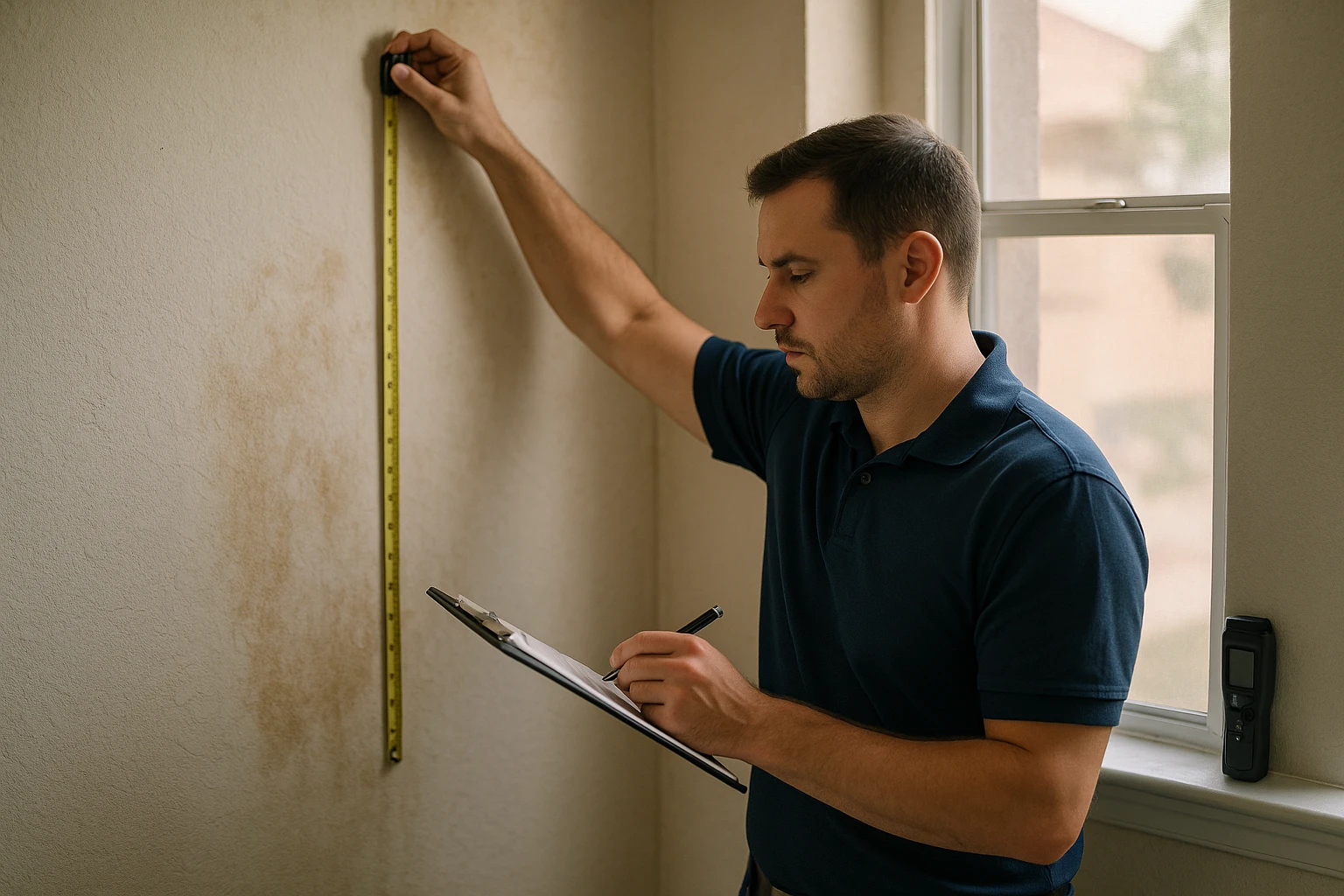
Mold pricing feels mysterious because two jobs that look identical from the doorway can cost very differently once someone reads the moisture behind the wall. A stain the size of a dinner plate might be a ninety-minute clean, or it might be the visible edge of a leak that has been wetting the bottom plate of a wall for a year. The price tracks the hidden damage, not the visible spot.
How pros build the estimate
Reputable remediators in El Paso price by the scope of contamination and the work required to remove it safely, not by scaring you with a flat “mold removal” fee. A typical estimate is assembled from a few stacked pieces.
- Assessment and testing. An inspection runs roughly $250–$600; adding air or surface samples with lab analysis adds about $100–$300 per sample. Many companies credit the inspection fee toward the job if you hire them.
- Containment and air control. Plastic sheeting, zippered doorways, and a negative-air machine with HEPA filtration keep spores from spreading while crews cut into wet materials. This is labor and equipment, and it is the line item DIY skips — which is exactly why DIY so often spreads the problem.
- Removal of affected materials. Wet drywall, baseboard, soaked insulation, and ruined carpet pad come out and get bagged. Porous material that stayed wet generally can't be saved; it's cheaper to replace a few feet of drywall than to chase mold inside it.
- Cleaning and treatment. HEPA vacuuming, damp-wiping framing, and applying an antimicrobial to salvageable structure.
- Drying. Air movers and dehumidifiers run for two to four days. In El Paso's dry air the room surface dries fast, but a wall cavity, a slab, or trapped insulation holds water far longer than the paint suggests.
What drives an El Paso bill up or down
A few local factors move the number more than anything else, and most trace back to how desert homes are built and cooled.
Where the water came from. A capped, fixed leak that wet a small area is the cheap end. A swamp-cooler problem that has been blowing humid air and spores through ductwork all summer can mean cleaning the cooler, the ducts, and several rooms at once. A slab leak under a foundation, or arroyo floodwater that carried silt and bacteria indoors, sits at the expensive end because the contamination is wider and the structure stays wet longer.
What got wet. Mold on a hard, non-porous surface — tile, sealed concrete, metal duct — can often be cleaned in place. Mold in drywall, in framing lumber, in cabinet particleboard, or in attic sheathing means removal and rebuild, which is where labor adds up.
Access. A spot you can reach standing up costs less than the same spot inside a wall, under a tub, in a tight attic over a flat roof, or behind built-in cabinetry that has to come out first.
The rebuild. Remediation removes the mold and the ruined material; it usually leaves you with bare studs and a hole. Putting the room back — new drywall, texture, paint, baseboard, flooring — is a separate cost, sometimes folded into the same contract and sometimes handled by a different trade.
Remediation vs. the rebuild
This is the single biggest source of sticker shock, so it's worth stating plainly. “Mold remediation” means making the mold and the moisture go away safely. “Reconstruction” means making the room look like a room again. A $2,500 remediation can be followed by a $2,500 rebuild, and a homeowner who only heard the first number feels blindsided by the second. When you compare quotes, confirm exactly where each one stops — at bare framing, or at finished paint — so you're comparing the same thing.
Where insurance fits
Texas homeowner policies usually cover mold only when it results from a covered, sudden event — a burst supply line, an overflowing water heater — and most policies cap mold remediation at a set dollar amount regardless of the actual cost. Damage from long-term seepage, deferred maintenance, or groundwater is typically excluded, and standard homeowner policies don't cover flood at all; that requires separate NFIP or private flood coverage, which matters in El Paso's arroyo and Lower Valley flood zones. Our Texas mold and insurance guide walks through the distinctions before you file.
How to keep the cost honest
The best protection against overpaying isn't haggling — it's getting a clear, written scope. Look for an itemized estimate that names the affected rooms, the square footage, the containment plan, what gets removed, and what gets dried. Be cautious of any company that quotes a big number sight-unseen, pressures you to sign immediately, or insists every dark spot is toxic black mold. For larger or insurance-related jobs, having the company that tests be independent from the company that remediates avoids the obvious conflict of interest.
If you want a ballpark before anyone visits, our El Paso mold removal cost calculator turns a rough area and severity into an estimate range. It's a planning tool, not a quote — but it'll tell you whether you're likely looking at a few hundred dollars or a few thousand before you make a single call.