Why the signs are subtler here
In Houston or Miami, mold tends to be loud: visible growth, damp air you can feel, a smell that fills a room. In El Paso, the dry air constantly wicks surface moisture away, which masks the obvious signs even while water sits trapped in a wall or duct. That means desert homeowners have to read fainter clues. None of the signs below proves you have mold on its own, but each is a reason to look closer — and two or three together usually mean it's time to investigate the moisture source.
The smell clues
1. A musty, earthy smell. The most reliable early sign. If a room, closet, or vent smells like a wet basement or damp cardboard, trust it — that odor is mold producing gases as it grows, and noses catch it before eyes do.
2. A “dirty sock” smell when the cooler runs. Specific to El Paso. If the musty smell appears or worsens when the swamp cooler or AC kicks on, the growth is in the cooler or the ducts, and the system is distributing it.
3. A smell that's stronger in one spot. Walk the house. If the odor concentrates near a particular wall, under a sink, in a closet, or at a vent, you've found where to look.
The visual clues
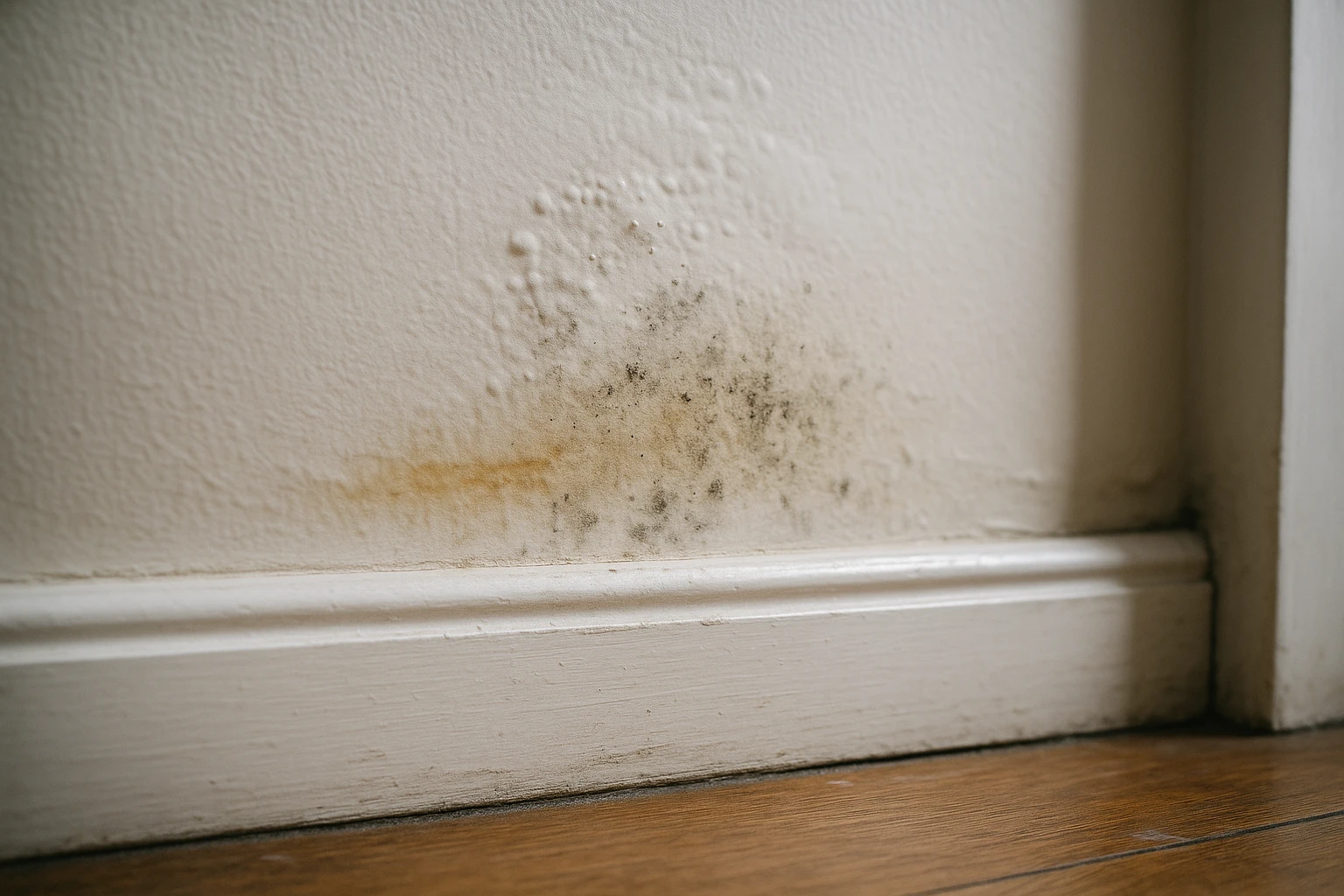
4. Spots and discoloration. Black, green, gray, or brown speckling on walls, ceilings, grout, or window frames. It can look like dirt or soot; if it doesn't wipe clean, suspect mold.
5. Water stains and rings. Yellow-brown stains on a ceiling or wall mark where water has been, even if it's dry now. A ceiling stain below a flat roof, a swamp cooler, or an upstairs bath is a flag.
6. Bubbling, peeling, or warping. Paint that blisters, wallpaper that lifts, drywall that bows, or baseboard that warps means moisture is or was in that material.
7. Efflorescence on masonry. A chalky white mineral bloom low on a block or adobe wall — common in valley homes — signals water moving up through the wall. It isn't mold itself, but it marks the moisture that feeds it.
The structural and moisture clues
8. A history of water. A past slab leak, a monsoon that got water inside, an AC overflow, a water heater that let go. Mold from a water event can surface weeks later, so a dry-looking room with a wet past deserves a look.
9. Condensation where it shouldn't be. Sweating ducts, damp spots around registers, or moisture on a closet wall against the cooler all point to the kind of trapped humidity mold needs.
10. Persistent damp in one area. A cabinet under a sink that's always a little damp, a corner that never quite dries, carpet that stays cool and moist near a wall.
The health clues
11. Symptoms that ease when you leave. If congestion, sneezing, itchy eyes, headaches, or a scratchy throat lift when you're away from the house and return when you come back, the building may be the cause. In El Paso it's easy to blame dust and pollen — and sometimes that's right — but a clear come-and-go pattern tied to home is worth investigating.
12. Symptoms that track with cooler season. Allergy or asthma trouble that reliably worsens once the swamp cooler comes on for the summer suggests the cooler is circulating spores, not just pollen.
What to do when you spot the signs
One faint clue might be nothing. But if you've got a musty smell plus a stain, or symptoms that track with the house, the right move is to find the moisture source rather than paint over the spot. Painting or bleaching a surface stain without fixing what's keeping it wet just buys a few weeks before it returns. Check the obvious suspects first — the swamp cooler and its ducts, under-sink cabinets, around the water heater, ceilings below the AC and flat roof, and the base of walls on a slab or in a valley home.
If you find growth larger than a small patch, smell it without seeing it, or it keeps coming back, that's the point to bring in an independent inspection. Our mold inspection and testing service finds the moisture source and maps how far it's spread, so you fix the cause once instead of chasing the stain. And if you're not sure whether what you're seeing even qualifies as a desert mold problem, our explainer on why El Paso gets mold puts these clues in context.