The desert paradox
It's a fair question. Mold needs sustained moisture, and El Paso is one of the driest cities in the country — roughly nine inches of rain a year, low-double-digit humidity for long stretches, and sunshine almost every day. Outdoor air here will not grow mold on a wall. And yet local remediation crews stay busy year-round. The contradiction resolves once you stop thinking about the climate outside and start thinking about the microclimates we build indoors. Desert houses don't catch mold from the weather; they manufacture moisture in specific spots and then seal it in.
Reason one: the swamp cooler
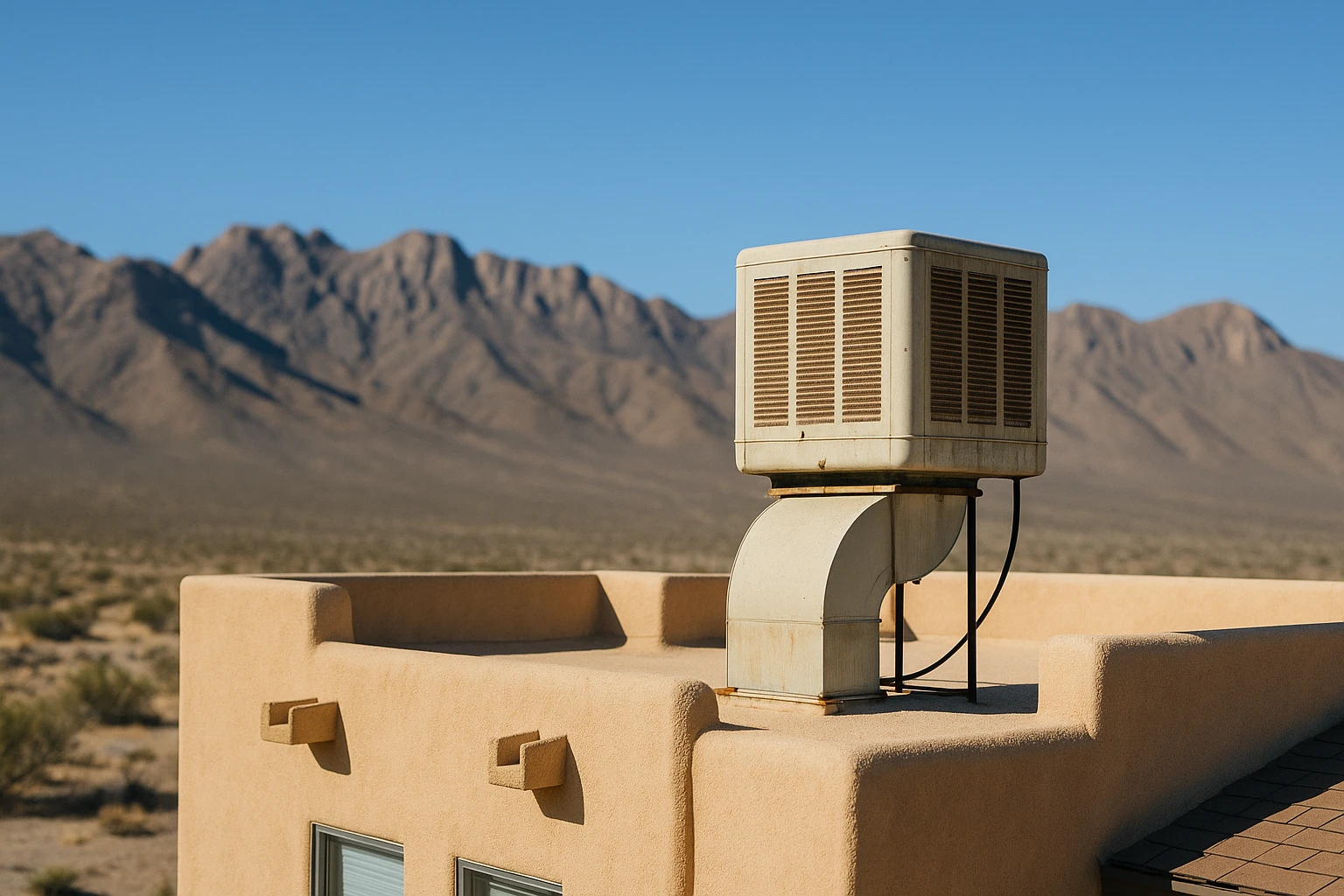
The single most El Paso source of indoor mold is the evaporative cooler — the swamp cooler that has kept the city comfortable for generations. Its entire job is to add water to the air: it pulls dry desert air through wet pads and blows the cooled, humidified result into your house. That's wonderful for comfort and brutal for mold control. The pads stay damp, the reservoir pan holds standing water that grows algae and slime, the bleed-off line clogs, and ducts sweat where cool moist air meets warm metal. The result is a steady supply of humidity and a warm, dark, wet machine on your roof feeding it into every room. When a cooler-cooled house smells like a wet basement or a gym bag in July, that musty “dirty sock” smell is the tell. Our swamp cooler mold prevention guide covers the fixes in detail.
Homes that have switched to refrigerated air aren't immune; they just have a different failure point. Central AC pulls humidity out of the air and drains it through a condensate line. When that line clogs — and in dusty El Paso it does — water backs up into the pan, overflows onto a ceiling or into a closet, and feeds mold in a spot no one looks at until there's a stain.
Reason two: monsoon and the arroyos
From July into September, the monsoon flips the script. Storms that drop a startling amount of rain in an hour hit ground that can't absorb it — rocky desert soil and miles of pavement — so the water runs. It pours off the Franklin Mountains, down arroyos, and through neighborhoods that sit in its path. In 2006, a storm dropped close to a year's worth of rain in a couple of days and caused hundreds of millions in damage. Every monsoon since has reminded newer residents that “flash flood” is a literal description here. When that water gets into a house — through a door, a low window, a roof, or up through a slab — the desert's dryness becomes a trap. A wall that's now wet inside dries slowly while the surface looks fine, and mold gets a multi-day head start before anyone realizes the cavity never dried.
Reason three: leaks the dry air hides
In a humid climate, a small plumbing leak announces itself: things stay damp, the smell builds, mold appears fast. In El Paso, the same leak can hide for months because the dry air wicks away surface moisture and masks the clues. The water is still there inside the wall or under the slab, quietly feeding mold in the dark, but the room never feels humid and the homeowner never suspects. Slab leaks are common in our expansive, shifting soils; older galvanized and cast-iron plumbing in central and valley homes corrodes and weeps; flat and low-slope roofs pond water and leak at parapets. None of these care that it's dry outside.
Reason four: the valley water table
Down in the Lower and Upper Valley — Ysleta, Socorro, San Elizario, the old farmland along the Rio Grande — the ground itself holds water. High water tables, decades of irrigation and acequias, and adobe or block construction combine to push moisture up into walls from below. You'll see it as efflorescence, the chalky white mineral bloom on masonry, and as paint that bubbles near the floor. That's rising damp, and it's a moisture source the desert sky has nothing to do with.
So, yes — but differently
The practical takeaway is that El Paso absolutely gets mold, but rarely the way humid cities do. You're unlikely to find mold creeping across a whole bathroom from ambient humidity. Instead it shows up in defined spots tied to a specific moisture source: around a swamp cooler and its ducts, in a wall hit by storm water, under a sink or slab with a slow leak, low on a valley wall pulling groundwater up. That's actually good news. It means desert mold is usually fixable at the source — find the one thing keeping a material wet, stop it, dry the cavity properly, and remove what grew. If you've got a musty room in a dry city, something is making water indoors. The job is to find it.
If you're trying to spot the early clues, our guide to the signs of mold in an El Paso home walks through what to look, smell, and feel for before a small problem becomes a wall-sized one.