Why a desert city floods — and grows mold
It surprises newcomers, but El Paso is squarely in what forecasters call “Flash Flood Alley.” The reason isn't rainfall totals; it's the ground. Thin, rocky desert soil barely absorbs water, so when a monsoon cell parks over the Franklins and drops an inch in an hour, almost all of it runs off. That runoff funnels through canyons and arroyos, picks up speed and debris, and pours into the neighborhoods downhill. The city's own stormwater system was built up after a 2006 storm dumped a year's worth of rain in two days and caused more than $200 million in damage — a reminder that desert flooding is sudden, local, and severe.
When that water gets into a home — through a door threshold, a window, a roof or flashing leak, or up from a street that's acting as a drainage channel — the mold clock starts immediately. Mold can begin colonizing wet drywall and framing in 24 to 48 hours. In El Paso's heat, the surface dries deceptively fast while the material underneath stays saturated, so a home that “looks dry” two days later can still be feeding mold inside the walls.
The first 24–48 hours decide everything
Whether a soaked room becomes a cleanup or a full remediation comes down to drying speed. The priority sequence after monsoon water intrusion:
- Stop the water and stay safe. Don't enter standing water that may be near outlets or panels; cut power to affected areas if you can do it safely.
- Extract and document. Remove standing water and photograph everything before you move it — you'll need the documentation for insurance.
- Pull wet porous materials. Soaked carpet pad, baseboard, and the bottom of drywall trap water against framing; getting them out fast protects the structure.
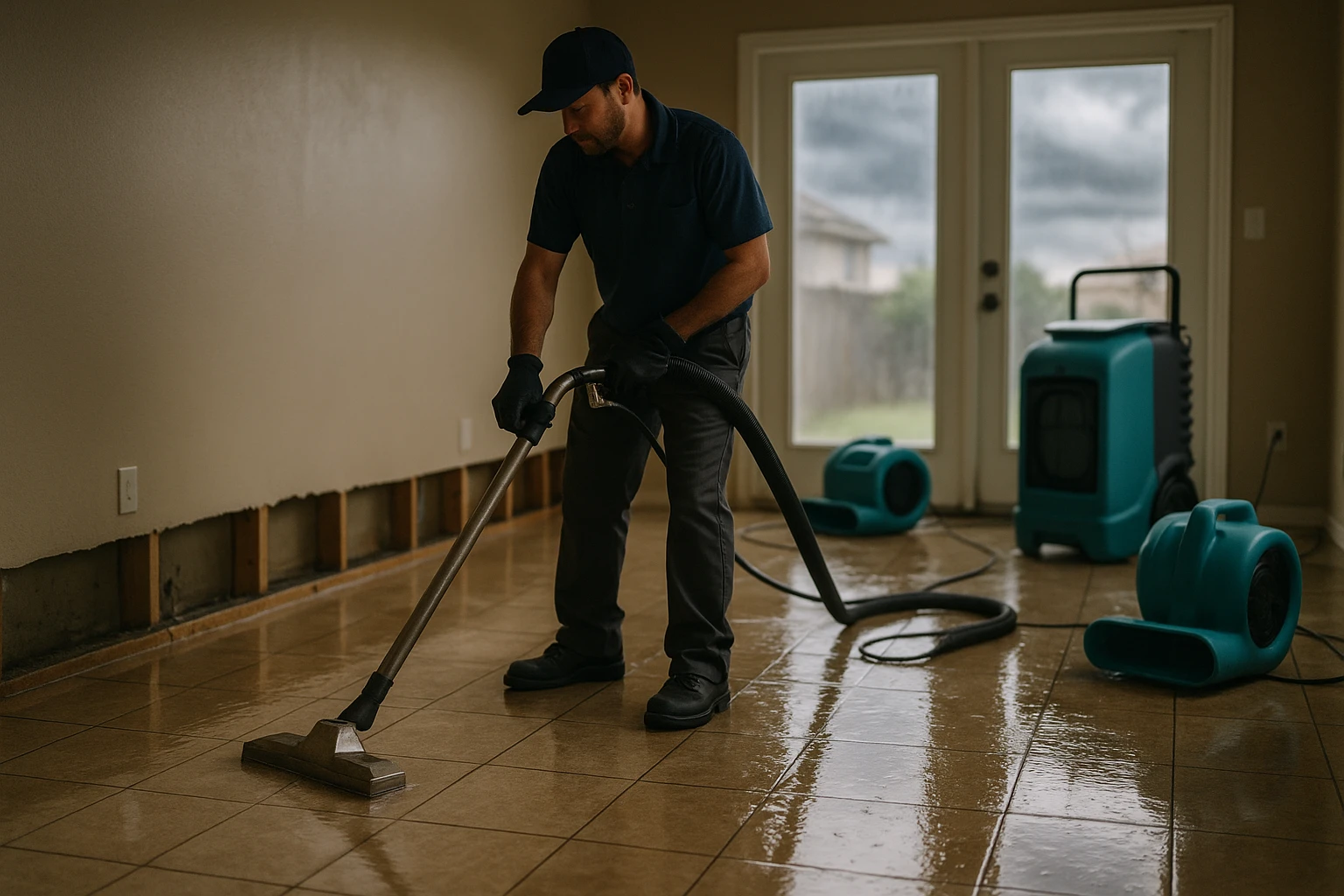
- Dry aggressively. Air movers and dehumidifiers, not just open windows — especially during monsoon weeks when outdoor humidity is up.
- Verify it's dry. A moisture meter on framing and slab is the only way to know; the surface lies.
Where storm water hides moisture in El Paso homes
Local construction shapes where the water settles. Flat and low-slope roofs — common on Southwestern and older homes — pond water and leak at parapets and drains during heavy storms. Stucco and block walls wick water at grade and at cracks. Slab-on-grade floors with no crawl space mean water that gets in has nowhere to drain and sits against bottom plates. And because so many homes run swamp coolers, a storm that soaks a roof-mounted cooler or its duct chase can drive water straight down into the ceiling. Northeast neighborhoods below the Franklins, foothill areas of the Westside, and low-lying Lower Valley streets see the most direct intrusion.
Water categories and why they matter
Not all flood water is equal. Clean water from a supply line is the simplest case. Monsoon runoff and arroyo flooding, though, is “gray” to “black” water — it has run across streets, yards, and who-knows-what before reaching your home, carrying silt, bacteria, and contaminants. Porous materials touched by that water generally can't be cleaned and saved; they have to come out. That's why a do-it-yourself approach to arroyo flooding often falls short: the carpet might look rinseable, but the pad and lower drywall it soaked are contaminated and need to be removed under proper precautions. Our monsoon flooding guide covers the homeowner steps in detail.
Insurance, flood coverage, and the mold exclusion
Here's the part that trips people up: a standard homeowner's policy generally covers sudden internal water damage (a burst pipe), but flood — water that rises from outside and enters the home — is excluded and requires separate NFIP or private flood coverage. Mold that results from a covered, promptly-handled water event may be partly covered; mold from a long-neglected leak usually isn't. Documentation and speed are everything: photograph the damage, keep receipts, and dry fast, because insurers look hard at whether you mitigated promptly. Our insurance guide breaks down how these pieces fit together for El Paso homeowners.
Getting help fast
After a monsoon hit, speed beats almost everything else. The independent restoration and remediation pros we serve homeowners with can get out quickly to extract, dry, and document — and to tell you honestly whether you're looking at a dry-out or a remediation. If your home took water in the last storm, don't wait for the musty smell to confirm it; get an inspection while drying is still possible. Call for a fast match with a licensed local pro who knows El Paso's monsoon patterns and its construction.