Why wet rooms beat dry air
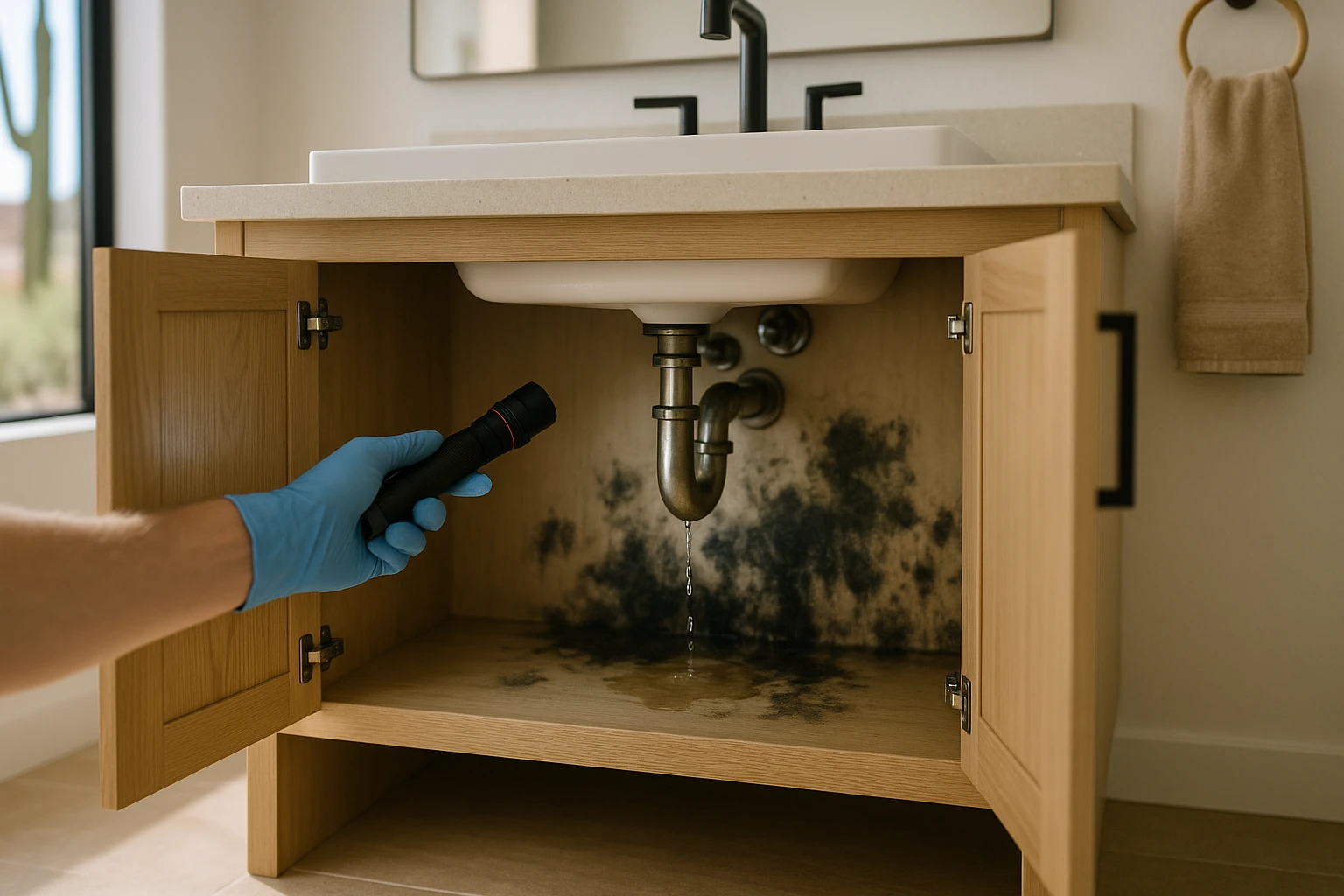
El Paso's low humidity protects most of your home most of the time. Bathrooms and kitchens are the exceptions, because they manufacture their own moisture on demand: showers, dishwashers, sinks, and the plumbing behind them. A supply line that weeps a few drops a day, a drain seal that's failing, a caulk joint that's let water behind the tile — none of it evaporates the way a spill on the patio would, because it's trapped inside a cabinet, behind a wall, or under a floor. That trapped, persistent dampness is exactly what mold needs, which is why the room with the best ventilation in the house is also the most common place we see it.
The usual hiding spots
- Under-sink cabinets: slow supply-line and P-trap drips that pool on the cabinet floor and wick into the wall behind.
- Behind and beneath the vanity: where splash and a failed backsplash seal keep drywall damp.
- Shower and tub surrounds: failed grout and caulk let water behind tile and into the framing.
- Toilet bases: a leaking wax ring soaks the subfloor and the bottom of nearby walls.
- Dishwasher and refrigerator lines: kitchen leaks that run under cabinets and flooring before they ever show.
- Window sills in showers: common in older El Paso homes, where condensation and splash rot the sill and frame.
Surface mildew vs. a real problem
Not every dark spot in a bathroom is a remediation job. The black specks in shower grout and along a window track are usually surface mildew — a cosmetic, cleanable problem driven by humidity and poor airflow. You can scrub those, improve ventilation, and re-seal the grout. The line to watch is whether the growth is only on the surface or whether the material behind it is wet. Mold that keeps coming back after cleaning, soft or spongy drywall, a musty smell with no visible source, or staining that spreads beyond the grout line all suggest moisture is trapped in the structure — and that's when removal, not scrubbing, is the right answer.
What removal involves
For a contained bathroom or kitchen mold problem, a licensed crew isolates the area, removes the affected porous materials — the cabinet base, the lower drywall, soaked subfloor — and HEPA-cleans and treats what remains. The non-negotiable first step is finding and fixing the leak; remediating around an active drip just guarantees a repeat visit. Because these rooms involve plumbing, the work often coordinates with a plumber, and the rebuild includes proper moisture-resistant materials and resealed joints so the space resists the next small leak better than it did the last one.
Ventilation still matters in the desert
Even in dry El Paso, a windowless bathroom with a weak or mis-vented exhaust fan holds shower humidity long enough to grow surface mildew and to keep wall cavities damp. A fan that actually vents outside — not into the attic — and runs for fifteen or twenty minutes after a shower makes a real difference. In kitchens, a working range hood vented outdoors and prompt attention to any under-sink dampness prevents the slow accumulation that turns into a cabinet full of mold. These small habits are cheap insurance compared with opening a wall.
When it's bigger than one room
Bathroom and kitchen leaks have a way of traveling. A toilet or shower leak on a second floor can soak the ceiling of the room below; an under-sink leak against an exterior slab wall can wick into the next room. If you're finding mold in a bathroom and also smelling mustiness elsewhere, or seeing stains on an adjacent ceiling, the problem may have outgrown a single-room fix and crossed into whole-home territory. An inspection is the way to know the true extent before committing to a scope.
Cost and getting started
A contained single-vanity or single-wall remediation is one of the more affordable mold jobs — often a low four-figure project including the rebuild — while problems that have soaked subfloor, traveled to adjacent rooms, or involve extensive tile demolition cost more. Catching it early, when it's still one wet cabinet, is the difference. If a bathroom or kitchen in your home smells musty, keeps growing mold after you clean it, or has a cabinet that's stained or soft, we can connect you with an independent local pro for a free assessment. We serve homeowners across West, East, Northeast El Paso, and the valley.