The Central El Paso moisture picture
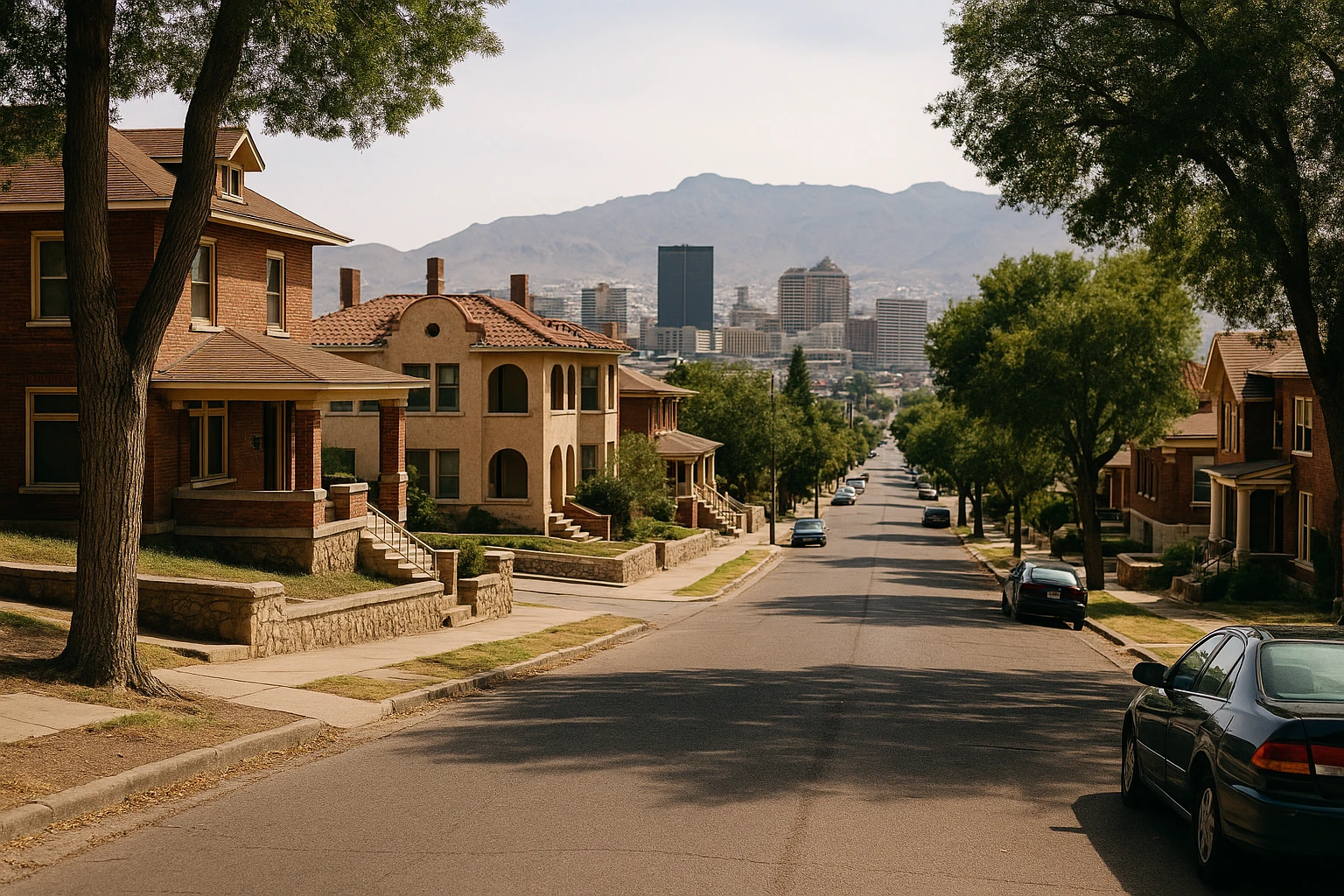
Central El Paso is the city's historic heart — Sunset Heights with its Victorian and territorial homes near downtown, the bungalows of Manhattan Heights and Five Points, and the dense older neighborhoods that grew up before air conditioning was a given. The housing here is old, often beautiful, and full of the moisture vulnerabilities that come with age: original or much-patched plumbing, flat and low-slope roofs that have been re-coated many times, masonry and stucco walls that wick water at grade, and renovations layered over decades that can hide failed moisture barriers. Mold in Central homes is usually the slow product of these aging systems rather than a single dramatic event — though the area's street flooding can deliver those too.
Streets that carry the storm
Central El Paso's older neighborhoods were laid out before modern stormwater engineering, and like much of the city, the streets themselves are designed to carry runoff during heavy rain. The historic districts on the slopes below the Franklins — Sunset Heights, the area near Kern and Manhattan Heights — can see water move fast down the grid during monsoon storms, pooling at low points and entering homes that sit below street level or have settled over the decades. When that water gets into a hundred-year-old home with a basement or a low first floor, it finds the porous old materials mold loves. Our monsoon water-damage page covers what to do in the first 48 hours.
Old plumbing, old roofs
The quiet, year-round source of Central mold is the building's own aging systems. Galvanized and cast-iron plumbing from the early-to-mid 1900s corrodes and develops slow leaks inside walls and under floors. Flat roofs, common on the era's architecture, rely on coatings and flashing that fail and let monsoon rain track into ceilings and wall tops. Original wood floors and lath-and-plaster walls hold moisture and grow mold readily once they're wet. And many Central homes have been chopped into apartments or had additions tacked on, creating junctions where flashing and barriers were never done right. None of this is a reason to fear an old home — it's a reason to diagnose carefully and fix the water, not just the stain.
Common Central El Paso mold issues
- Aging plumbing leaks inside walls and under floors from corroded galvanized and cast-iron lines.
- Flat-roof and parapet leaks surfacing as ceiling and wall-top stains after storms.
- Street-flood intrusion into low or below-grade first floors during heavy monsoon rain.
- Rising damp in masonry and stucco walls at grade.
- Renovation and addition junctions where moisture barriers and flashing were never properly done.
What to do if you suspect mold here
Old homes reward a remediator who respects them. The first step is an inspection that pins down the source — corroded plumbing, a failing roof, street-water intrusion, or rising damp — because each calls for a different fix, and a cosmetic patch over an aging system just buys a few months. Remediation then follows the standard containment-first sequence, with care taken around plaster, original wood, and historic detailing. The goal is to remove what's contaminated and stop the water without gutting the character that makes a Central home worth owning. We connect homeowners in Sunset Heights, Manhattan Heights, Five Points, and the surrounding districts with independent inspectors and remediation crews experienced with historic construction. Start with an inspection or sketch a budget with our cost calculator.
Working with historic character, not against it
The wrong repair can damage a historic home as surely as the mold can — sealing breathable masonry with the wrong coating, or replacing original materials when cleaning and drying would do. A good Central El Paso remediation distinguishes what must come out (contaminated porous materials) from what can be saved and stabilized, and it fixes the moisture pathway so the problem doesn't return. If your historic home has musty rooms, ceiling stains after storms, or damp old walls, get matched with a pro who knows how to work on homes like yours.
What drives mold in Central El Paso
If there's a single thing to understand about mold in Central El Paso, it's early-1900s construction with aging galvanized and cast-iron plumbing, plus street-borne flooding in the older grid. Old galvanized supply lines and cast-iron drains corrode and weep inside walls, and flat or parapet roofs on older central homes pond water and leak at the edges. That's why a real fix here starts with identifying the moisture source rather than scrubbing the visible spot — in a desert, the stain is just where the water finally showed itself, and it's usually lower and wider inside the wall than it looks on the surface.
Local housing stock matters too. Central El Paso is historic homes, many nearly a century old, with original or patchwork plumbing and flat or low-slope roofs, and the construction shapes how mold behaves. The practical lesson for homeowners around Manhattan Heights, Sunset Heights, Five Points, and the historic core is that a musty smell or a small stain almost always has a findable cause behind it — and once that cause is stopped and the cavity is properly dried, the problem genuinely goes away rather than returning in a few weeks.
Getting help in Central El Paso
We connect Central El Paso homeowners — across ZIP codes 79901, 79902, and 79903 and the surrounding area — with licensed, independent local professionals who know how desert homes hold water. The process is simple: tell us what's going on, we match you with a pro suited to your situation, and you get a free, no-pressure assessment. There's no obligation and the service is free to you. If you've had recent flooding or water is still coming in, call right away, because in Central El Paso's climate the surface dries fast and hides how wet the structure underneath still is.