The clock that matters
Mold needs a day or two of sustained moisture to take hold. After flooding, that clock starts immediately, and El Paso adds a cruel twist: our dry air dries the surfaces quickly, which makes a room look recovered while the wall cavities, the slab, the insulation, and the subfloor are still soaked. Homeowners relax because the floor feels dry, and the hidden water feeds mold for the next two weeks. The single most important thing you can do after a flood is dry the structure you can't see, not just the floor you can.
First: make sure it's safe
Before anything else, handle the hazards floodwater brings. If water reached outlets, the panel, or appliances, keep the power off to affected areas until an electrician clears them. Treat arroyo and street floodwater as contaminated — it carries silt, sewage overflow, fuel, lawn chemicals, and whatever it picked up running down the mountain — so wear boots and gloves, keep kids and pets out, and wash up after contact. If the flooding was severe or the water was clearly dirty, this is category-three water and not a DIY job; the cleanup itself requires protective measures most homeowners aren't equipped for.
The first 24–48 hours
- Stop the source if you safely can. Tarp a roof leak, clear a blocked drain, redirect water away from the door. You can't control the storm, but you can stop water still entering.
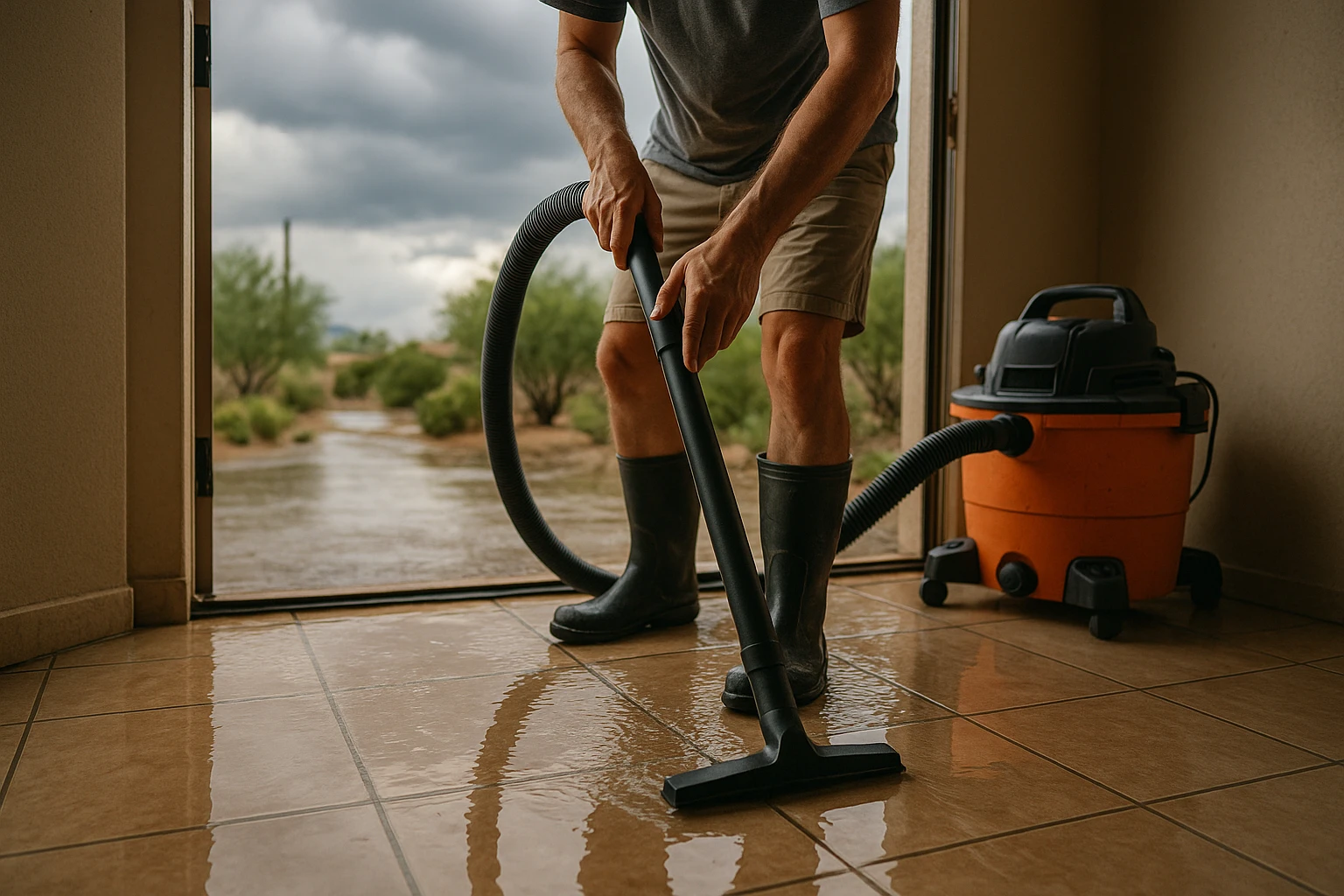
- Get the standing water out. Wet/dry vacuum, pump, mop — remove every bit of pooled water as fast as possible.
- Pull up wet soft materials. Carpet and pad that soaked in dirty floodwater rarely come back and hold moisture against the slab; getting them out helps the floor dry and removes a contamination source.
- Open the structure to dry. Move furniture off wet flooring, open closets and cabinets, lift baseboards if you can, and pull a few inches of wet drywall away from the bottom of affected walls so the cavity can breathe. Drywall wicks water upward, so the wet zone is usually higher than it looks.
- Move air and pull moisture. Run fans and, critically, a dehumidifier. El Paso's dry outdoor air helps if you can ventilate, but a wall cavity needs forced airflow to dry, and a dehumidifier pulls water out faster than open windows alone.
- Document everything. Photograph and video the damage and the water line before you remove anything, for insurance.
The trap unique to the desert
It's worth repeating because it's the mistake people make here. In a humid climate, a flooded room stays obviously damp and homeowners keep drying. In El Paso, the surface dries in a day, the room looks fine, and the drying stops — while the bottom plate of the wall, the insulation behind the drywall, and the slab underneath are still holding water. Two weeks later a musty smell appears, the paint near the floor bubbles, and now it's a remediation job. The fix is to keep drying aggressively for several days even after surfaces feel dry, and ideally to have someone read the actual moisture in the walls and floor with a meter rather than judging by touch.
What to throw out and what to save
Porous materials soaked in dirty floodwater generally go: carpet pad, soaked drywall, wet insulation, particleboard furniture and cabinetry, mattresses. Non-porous and semi-porous items — tile, sealed concrete, metal, solid wood, glass, hard plastics — can usually be cleaned, disinfected, and dried. When in doubt about something that touched contaminated water and stays damp, it's safer and often cheaper to replace it than to grow mold inside it.
Dealing with insurance
Here's the hard truth for El Paso: standard homeowner policies don't cover flood. Damage from a monsoon storm, an arroyo overflow, or surface water running into your home is excluded unless you carry separate flood insurance through the NFIP or a private policy. If the water came from inside — a pipe that burst during the storm rather than the storm water itself — that may fall under your homeowner policy instead. Document the source carefully, because the cause determines which coverage, if any, applies. Our Texas mold and insurance guide explains the flood-versus-homeowner distinction in detail.
When to call a pro now, not later
Call immediately if the flooding was more than an inch or two, if the water was visibly dirty arroyo or street runoff, if it sat for more than a day before you got to it, if it reached drywall and insulation, or if you simply can't get the structure dry with the equipment you have. Professional crews bring truck-mounted extraction, industrial air movers, and the moisture meters that tell you whether a wall is actually dry or just dry on the surface — which is the whole ballgame in the desert. Our monsoon and flood water-damage mold service is built around fast structural drying so a flood stays a flood and doesn't become a mold project.