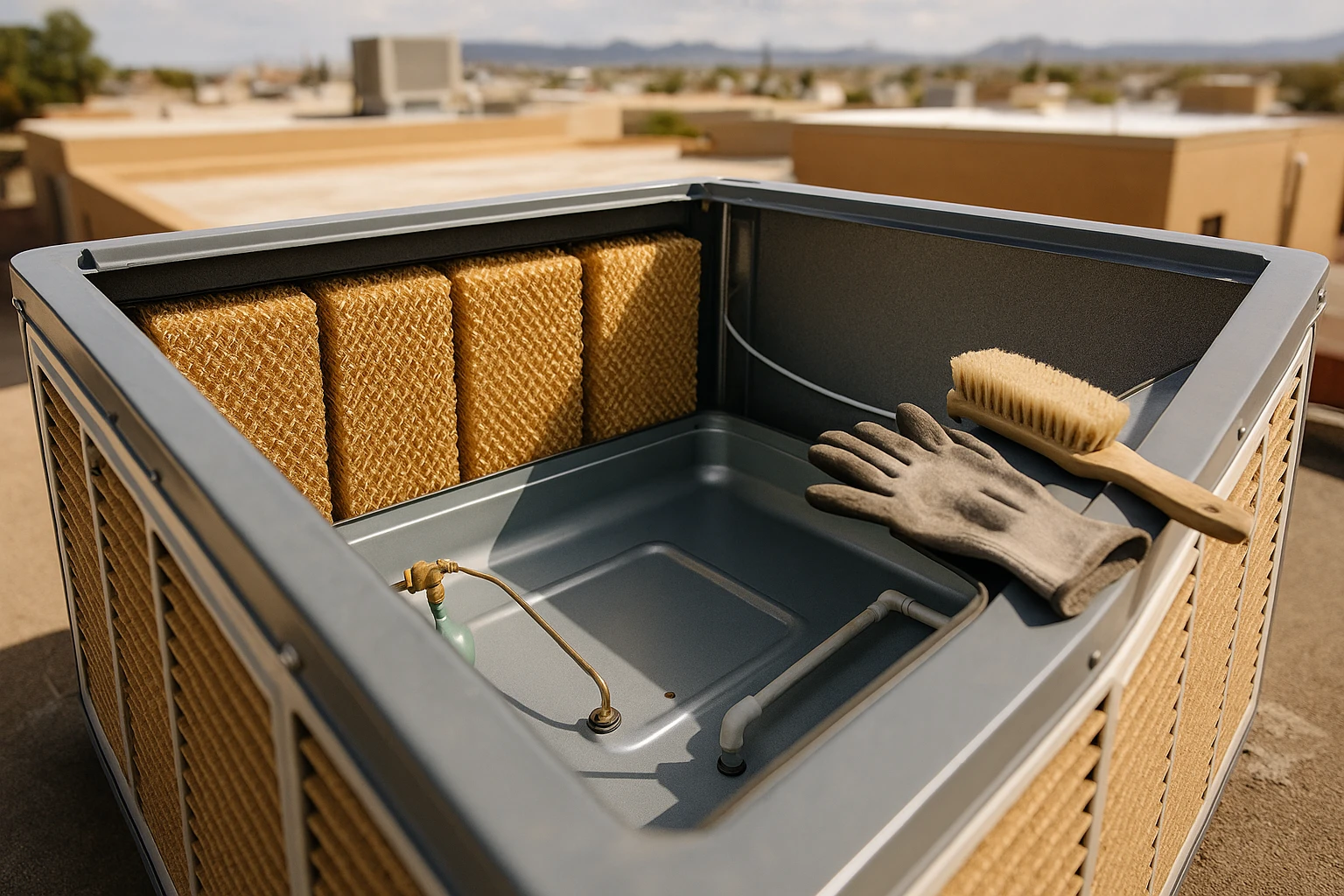
Why the cooler is the usual suspect
An evaporative cooler cools by evaporating water — it draws hot, dry desert air through soaked pads so the air comes out cooler and far more humid. For comfort that's a great trade in our climate. For mold it's a problem, because you've installed a warm, dark box full of standing water on your roof and connected it by duct to every room. Three things inside it reliably grow mold and then distribute it: the pads, the pan, and the ducts. Keep those three under control and you eliminate most cooler-driven mold before it starts.
The pads
Cooler pads — whether aspen fiber or rigid cellulose media — spend the whole season wet, which is exactly the condition mold wants. Aspen pads break down and should be replaced every season; rigid media lasts a few years but still collects mineral scale and biological slime from our hard water. Mineral buildup blocks airflow, keeps pads soggy unevenly, and gives mold a foothold. Replace aspen pads at startup each spring, inspect rigid media and clean or replace it when it's scaled or smells, and never run a cooler on pads that went through winter damp.
The pan and the water
The reservoir pan at the bottom holds standing water the entire time the cooler runs, and standing water plus El Paso minerals equals algae, slime, and sediment. A neglected pan turns into a shallow pond growing biofilm that the pump then sprays back over the pads and into the airstream. Drain and scrub the pan at season start and again midsummer, keep the float valve adjusted so the water level is correct, and consider a cooler treatment tablet rated for evaporative systems to slow algae. The bleed-off line — the small tube that continuously dumps a little mineral-heavy water so it doesn't concentrate — must stay clear; when it clogs, minerals and slime build up fast.
The ducts and the “dirty sock” smell
Here's the part homeowners miss: even a clean cooler pushes humid air into metal ducts, and where that cool moist air meets warmer duct surfaces, condensation forms. Dust settles in that damp duct, and mold grows in the ductwork itself — then every time the cooler kicks on, it blows that musty smell through the house. That distinctive “dirty sock” or wet-gym-bag odor when the cooler starts is the classic sign of mold in the cooler or ducts, not just stale air. If cleaning the cooler doesn't clear the smell, the ducts are the next place to look, and that often needs a professional duct cleaning.
A simple seasonal routine
- Spring startup: drain and scrub the pan, replace aspen pads or clean rigid media, check and adjust the float, confirm the bleed-off line is clear, and run it a few minutes to check for even wetting and odd smells.
- Midsummer: re-scrub the pan, rinse mineral scale off pads and louvers, and verify the bleed-off is still flowing.
- Fall shutdown: this is the one most people skip and it matters most. Drain the pan completely, dry it out, remove or dry the pads, and disconnect or shut off the water supply. A cooler that sits all winter with a damp pan and wet pads becomes a mold incubator that you then fire up and blow through the house next spring.
When prevention is already too late
If the musty smell is established, you see visible growth inside the cooler or at the registers, or anyone in the house has had worsening allergy or asthma symptoms that track with cooler season, you're past maintenance and into remediation. At that point cleaning the cooler alone won't fix it — the ducts and the rooms they feed may need professional attention, because spores have been circulating for a while. Our swamp cooler and HVAC mold removal service handles the cooler, the ductwork, and the affected rooms as one system, which is the only way to actually clear it.
Should you switch to refrigerated air?
Many El Pasoans are converting to refrigerated air, and it does remove the humidity-adding problem at the root. But it's not a magic mold cure — central AC creates condensate, and its drain line clogs in our dust and overflows into ceilings and closets if it isn't maintained. Whichever system you run, the principle is the same: water is being created or handled somewhere in the machine, and mold prevention means making sure that water always has a clean path out and never sits where it shouldn't.